
How Lawyers Make Sound Decisions With Incomplete Information

Legal decisions often must be made before every fact is known. Insights from legal experts show how to prioritize fatal risks, verify uncertain records, and protect rights when evidence is incomplete. These practical strategies also help lawyers set timelines, explain changing outcomes, and pursue claims with the proof available.
§ How this was made
The perspectives in this article were written by the named contributors and submitted through Connectively. Connectively's automated system selected them and used AI to write the headline, introduction, section headings, summary sections, and illustration, and to make minor edits for clarity. Articles are assembled and published automatically. Report errors to corrections@connectively.us. How we make our content

Illustration generated with AI
What the experts said
Appearances
- Triage Fatal Risks Over Administrative HasslesLoretta Kilday
- Verify Records and Escalate Uncertain DisputesTammy Sons
- Assert Control Before Critical Moments PassRoss Goodman
- Let Facts Dictate Project TimelinesJens Hagel
- Explain Fluid Outcomes With CandorJose Fanego
- Protect Irreversible Rights Without Full EvidenceRory Safir
- Pursue Lemon Claims on Available ProofSteven P. Nassi Esq.
Triage Fatal Risks Over Administrative Hassles
 Loretta KildayDebtCC Spokesperson, Debt Consolidation Care
In my thirty-plus years of litigating high-stakes bankruptcy and restructuring cases in Chicago, I have learned that the pursuit of complete certainty is the most expensive luxury a distressed client can buy. Traditional lawyers are trained to be risk-averse cowards, demanding every single PDF be stamped, verified, and cross-referenced before they will commit to a legal strategy. But in the trenches of a financial crisis, time is literally working capital burning on a pyre. I do not wait for perfect information. Instead, I operate on a rigid framework I call "Asymmetric Risk Triage." I decide a matter is ready for a structural recommendation the exact millisecond that the mathematical cost of waiting exceeds the potential liability of acting on incomplete data.
The lesson that permanently shaped this approach occurred during a brutal commercial restructuring early in my career. A hostile commercial lender was preparing to execute a freeze on my client's primary operating and payroll accounts. The CEO was completely paralysed, demanding we wait for our forensic accountants to finish auditing a complex offshore subsidiary before we filed the Chapter 11 petition. He was terrified of the perjury risk associated with submitting incomplete financial schedules to a federal judge. We were operating with perhaps sixty percent of the total financial picture, and the remaining data was days away.
I forcefully overrode the CEO. I explained that if we waited forty-eight hours to achieve perfect accounting certainty, the bank would freeze the liquidity, payroll would bounce, the workforce would walk out, and the enterprise value would drop to zero. There would be no company left to save. I executed the bankruptcy filing immediately with heavily estimated figures, deliberately accepting the administrative wrath of the court and the friction of amending the schedules later. The sole objective was to instantly trigger the federal automatic stay (11 U.S.C. SS 362). That stay deployed like a blast shield, legally blocking the bank's seizure and securing the company's vital cash flow.
The rule I enforce with every corporate and private client today is that you must mathematically differentiate between a fatal risk and an administrative headache. Submitting an incomplete legal filing was an administrative headache; a frozen payroll account was a fatal risk. When your balance sheet is violently haemorrhaging, you do not wait for a perfectly lit, sterile surgical theatre.
Verify Records and Escalate Uncertain Disputes
 Tammy SonsFounder/CEO, TN Nursery
As a business owner I've found it's not always possible to get all the information you need in order to file a claim by the deadline. I don't give legal advice to my business clients but I do make a number of business decisions relating to customer complaints and chargebacks with very limited information. One thing I've learned is the importance of separating fact from assumption. Before I act on behalf of the business I will do some research into the matter in question using the available documentation (contracts, correspondence with the customer etc). One thing I've learned about payment related disputes and deadlines is that the very act of trying to get more information about the claim can in itself make it harder to respond by the deadline. Other lessons have been around the need to assess the information you have and decide whether you need to go out and get more information or whether you need to seek legal advice.
Assert Control Before Critical Moments Pass
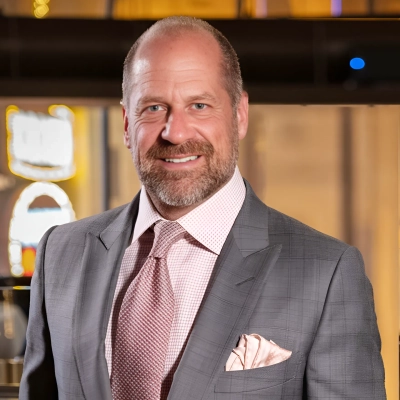 Ross GoodmanFounding Partner, Goodman Law Group
I don't wait for complete certainty. In criminal defense, certainty is rare and the early moments often matter most. Statements made early can be used against a client later, so the best lawyers take control from the outset instead of reacting. My job is to prepare first, then advise. I leave no stone unturned, looking for any overlooked facts, and I give clear guidance once the essentials are in hand. Some advice can't wait, like staying silent and not consenting to searches.
I also tell clients plainly what I don't yet know, and I adjust as new facts come in. In trial, a witness can surprise you, and you can't freeze. You adapt and pivot, immediately. I can't promise a result, but I can promise the client that it won't be for lack of investigating every possibility.
The lesson that shaped this came early. One year into my legal practice, I took on a Hells Angels member in the Laughlin case, my first federal jury trial, with national media watching. When you feel responsible for your client's life, you learn to make the best decision you can with what you have, and to hold yourself accountable when you get something wrong. That accountability builds credibility with judges, juries, and clients. The case ended in a mistrial because the government withheld evidence, which taught me that certainty is never guaranteed, but preparation and honesty still matter.
Let Facts Dictate Project Timelines
 Jens HagelFounder & Owner, kjello
I'm not a lawyer, but as a founder I buy legal advice, and I make the same kind of judgement calls for my own IT clients. The advice I value says what is known, what is still missing and what it recommends today. When a maritime client wanted an overseas site connected by early autumn, I called the date very ambitious and told them plainly that we had no clients or presence there. My rule since then: the timeline follows the facts, not the other way round. Jens Hagel, Founder & Owner, kjello (Hamburg, Germany)
Explain Fluid Outcomes With Candor
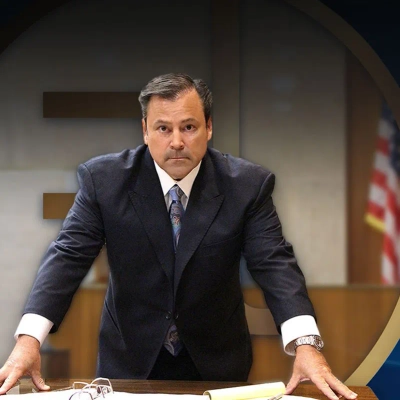 Jose FanegoAttorney, The Law Offices of José R. Fanego
Clients in a criminal case want certainty. They want to know what the future holds. Even if the news isn't great, clients need and want to hear it. One challenge is knowing exactly when you have enough information to provide a prognosis to your clients and some sense of certainty. There is no substitute for honesty. I work very hard to keep my clients involved in the process while explaining that contingencies could dramatically change the outcome of the case. I also am careful when explaining to clients that I have not seen all of the evidence yet, and as such must reserve judgment for the time being.
Once I have seen enough of the evidence and considered other factors like the personality of the judge, the personality of the prosecutors involved, and the quality of the police department on the other side, I can then for the first time give my client several scenarios for a likely outcome. Even then, I have to remind my clients that factors in the case may be fluid.
I believe that clients appreciate understanding how the case changes as it proceeds. I have found that clients at this late stage in the proceedings actually express gratitude for my withholding judgment early on. They themselves say they did not envision where we ended up at the beginning of the case. Honest communication is the key.
Protect Irreversible Rights Without Full Evidence
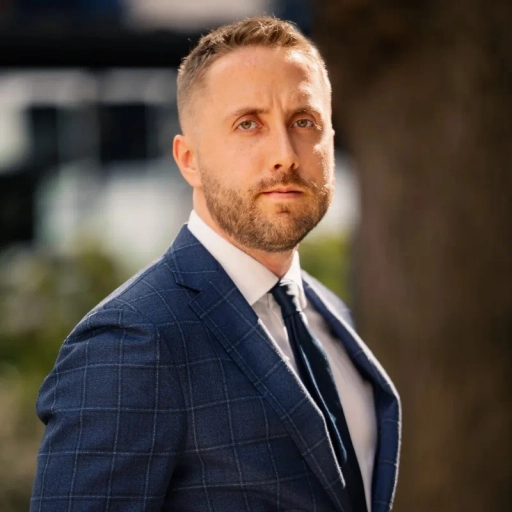 Rory SafirFounder and Principal Attorney, Safir Injury & Criminal Defense Law
1. How do you decide when you have enough information to recommend? In criminal defense the clock often decides for you. In Florida, a driver arrested for DUI has 10 days to ask for a review of the license suspension. That call gets made before I've seen the police report, the video or the breath test records. So I don't wait for certainty. I ask two things: what does this choice cost if I'm wrong, and can it be undone later? A missed deadline can't be undone, while a hearing request that turns out to be unneeded costs very little. When the downside is permanent, I act on what I have. When the choice can be revisited, like whether to accept a plea offer, I wait for the evidence.
2. What lesson shaped how you advise clients? Tell the client which kind of decision you're making. "We're doing this now because the window closes, and we can change course later" lands far better than a confident recommendation that shifts a month later. Clients handle uncertainty well when they know what's settled and what isn't.
Pursue Lemon Claims on Available Proof
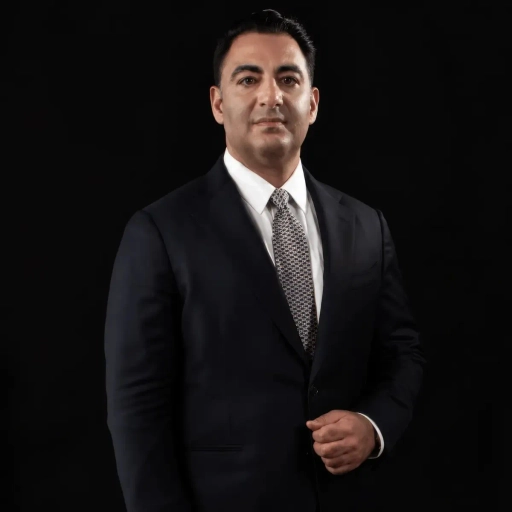 Steven P. Nassi Esq.Founder & Managing Partner, RockPoint Law P.C.
I give a recommendation when the facts I already have would support it under the law, even if the file is not yet complete. In lemon law work, that usually means a substantial defect that has come back after several repair attempts, or weeks in the shop, and a filing deadline that will not wait for every missing invoice. A missed deadline can end a claim, while missing paperwork can often be gathered later. I would rather tell a client, based on the repair orders in hand, that it is time to act, than wait for complete certainty until it is too late.