


Appearances
Thomas Ricotta; Yosi Yahoudai; Ankush Gupta; David Shoop; Roy L. Kaufmann; Reid Breitman; and 3 others of record
Offer Timely Workplace Legal Insights
 Thomas RicottaPartner, Ricotta & Marks, P.C.
We are partnered with a Digital PR team to provide timely legal commentary on emerging employment law issues. We are able to proactively contribute practical legal insights to journalists covering topics like workplace discrimination, wage and hour laws, AI in hiring, etc.
Digital PR is built around education where reporters need credible legal sources who can explain complex employment laws in a way that's accessible to the public, and attorneys have an opportunity to demonstrate their knowledge while helping people better understand their rights.
This has really strengthened our credibility within the legal community because it has established a track record of thoughtful commentary on evolving workplace issues. It has also created opportunities to build relationships with journalists and industry professionals who recognize us as a reliable source.
Publish a Compassionate Family Storybook
 Yosi YahoudaiCo-Founder & Managing Partner, J&Y Law
One of my favorite recent projects was writing a children's book with my co-founder, Jason. It was especially meaningful because Jason's mom was chronically ill when he was growing up, so he understands what it's like when a parent suddenly can't play with you the way they used to. We see families facing those same conversations every day after serious accidents, and we wanted to give parents a way to explain what's happening while reminding their children that their love never changes.
We developed the entire project in-house. Jason and I wrote the story, our marketing team helped develop the characters and illustrations, and employees across the firm submitted sketches and creative ideas. I even brought early drafts home to my kids to see what resonated with them, what confused them, and what made them smile. Before long, it wasn't just a work project anymore. It became a family project, too. Then we self-published it on Amazon.
I think that perfectly shows who we are. We're personal injury attorneys, but we're also creative, we're collaborators, and we're helping families through some of the hardest moments of their lives. The book let us support people in a different way, and I think people appreciate seeing that we're invested in the human side of what we do.
Fuse Owned Media and Operations
 Ankush GuptaFractional CMO, Fameninja ORM Management Company
The most effective partnership I built wasn't with another law firm. It was with the media network I already owned.
Most founders treat their personal brand and their business publications as separate channels. I ran them as one system. When I started taking on fractional CMO work at FameNinja, I realized that every piece of earned media I helped clients place could also run across our own network of Web3 publications reaching 10 million monthly readers. That gave me distribution most consultants don't control.
Here's what made it credible rather than self-promotional. I applied the same editorial standards to my own bylines that I required from client content. No puff pieces. No thinly disguised sales copy. If I wrote about reputation management or digital PR strategy, it had to teach something a competitor could use. The crypto founder community is small and very allergic to B.S. You get one chance.
The project that moved the needle was a six-month series on reputation repair for blockchain founders after FTX collapsed. I documented the exact suppression techniques we were using for clients dealing with negative press by association, then published the playbook openly across our publications. It cost me competitive advantage in the short term. But it turned my byline into a referral engine.
Within 90 days, three inbound clients specifically cited that series during discovery calls. They didn't care that I'd given away the method. They wanted the team that built it. That's when I understood that visibility without operational proof is just noise, but combining both makes you the obvious choice.
The brand alignment came from refusing to separate my operator credibility from my advisory role. I wasn't a strategist who hired people to execute. I was running the systems I was writing about. When I explained content humanization pipelines or LinkedIn prospecting automation in an article, those were tools my team used daily. Readers could tell.
The result was that my media network became the primary lead source for FameNinja's highest-value clients, all while establishing category authority in a space where most marketing consultants have no operational fluency. Collaboration doesn't always mean partnering with someone else. Sometimes it means using what you already built in a way that serves both your audience and your business.
Build a Defective Products Litigation Framework
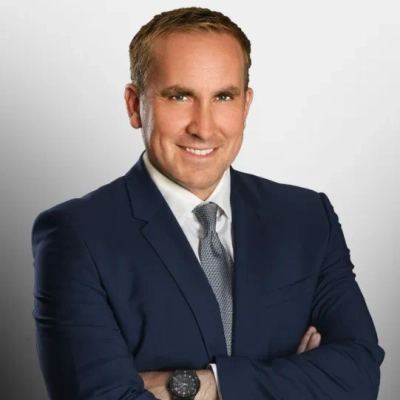
A collaborative project that significantly boosted my visibility and credibility in the legal community was when I partnered with a group of trial attorneys and medical experts to build a litigation framework around defective consumer products. The goal was to standardize how we investigated claims, preserved evidence, and presented complex product failures to juries in a way that was both technically accurate and easy to understand. In one case involving a faulty household appliance that caused severe burns, this collaboration allowed us to combine engineering analysis with compelling storytelling, ultimately leading to a strong outcome for the client and recognition among peers who began referring similar cases to our firm.
To ensure the partnership aligned with my personal brand, I was selective about who I worked with and how we approached the work. My focus has always been on accountability and giving a voice to injured individuals, so I made sure every collaborator shared that same commitment rather than chasing quick settlements or media attention. I also stayed directly involved in strategy and communication, which helped maintain consistency in how cases were handled and presented. That consistency not only strengthened results in court but reinforced trust within the legal community, which is ultimately what builds long-term credibility.
Present SCRA with Military Authority
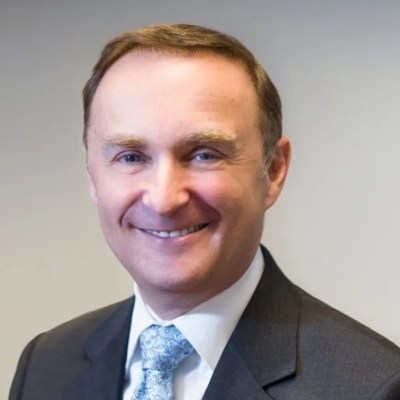 Roy L. KaufmannAttorney⎥ Civil Litigator⎥ SCRA Compliance Expert⎥ Executive, Servicemembers Civil Relief Act Centralized Verification Service
The project that enhanced my profile and credibility in the legal community was a continuing legal education session I built with a JAG officer to teach attorneys about Servicemembers Civil Relief Act (SCRA) applicability in a foreclosure and eviction situation. This sort of collaboration does the best job of putting me in front of practicing attorneys who often refer SCRA verification work to me afterwards. It worked because I brought a collaborator with military legal authority to present the material with me instead of simply presenting it as I had in the past.
Attorneys in these classes ask pointed questions about foreclosure timing rules because deadlines under this law are confusing to even seasoned litigators. In answering these questions, I come up with examples based on real situations and my experiences as a compliance officer. So, classes like this have led to ongoing referral relationships with attorneys who have sent me SCRA verification cases directly.
Each collaborative work I engage in must correlate to work I built my company around, protecting servicemembers, or I just turn it down. Although this has cost me referral income in the past, it ultimately keeps my legal reputation based around one singular mission. In practice, this means I regularly turn down partnership offers from lenders and collections companies whose products involve speeding up foreclosures or taking debt from service members. That can mean real compensation, but the moment a partnership starts working against that mission, it stops being worth the exposure. This is important because saying no to work keeps my reputation tied to the legitimate meaning of SCRACVS.
Lead Multidisciplinary Wrongful Death Workshop
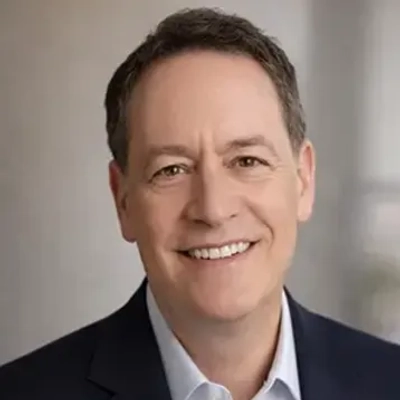 Reid BreitmanPersonal Injury Lawyer, Kuzyk Law Personal Injury & Car Accident Lawyers
A collaboration that noticeably expanded credibility was a private workshop with estate litigators, probate professionals, and civil trial attorneys on the overlap between wrongful death recovery, family decision making, and long term financial stewardship. I pursued that project because legal problems rarely stay inside one box, and the lawyers who see the full picture tend to earn deeper respect.
Alignment came from the project's tone and structure. The discussion emphasized judgment, timing, and the ripple effects of litigation choices on families already under strain. That matched a personal brand built on practical analysis and thoughtful advocacy. Visibility improved because the workshop showed an ability to bridge disciplines without losing legal rigor or human perspective.
Mentor While You Try Cases
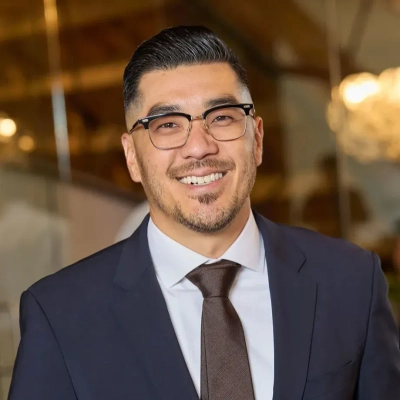 Elliott JungFounding Partner at HHJ Trial Attorneys, HHJ Trial Attorneys
The collaboration which I feel is most significant in terms of my career is being an adjunct professor while still practicing trials. As a graduate of Southwestern Law School and winner of regional ABA trial advocacy competition, I felt that it was my responsibility to assist upcoming litigators through sharing my knowledge about trials, which has been gained through experience rather than through classes. I was able to collaborate with faculty members and mentor students, asking practical questions regarding the problems they were going to face in practice.
I think that teaching is worthwhile only if I am continuing to try cases. I have tried over 50 cases in front of juries involving catastrophic injuries, traumatic brain injuries, workplace retaliation, and sexual assaults. Being actively engaged in litigation makes every lecture relevant and realistic, and my case results give examples without making it an advertisement.
I'm interested in working with people who share the same values as me. Although I love helping young lawyers grow and contributing pro bono work, I shy away from those who work solely for the sake of publicity. Achieving Super Lawyers and The National Trial Lawyers Top 40 Under 40 recognition requires many years of trial practice and establishing good relationships with professionals. My recommendation is quite simple. Do what you love to do and no one should know about it.
Explain Payroll Tax Collection Clearly
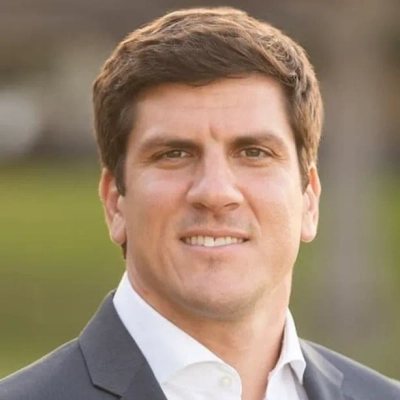 Jonathan SooriashFounder & CEO, J. David Tax law
I took part in a professional discussion series about payroll tax collection. My role was to explain the IRS process in plain language and show how collection issues can affect a business. Speaking to a professional audience increased my visibility by giving people a direct view of my tax knowledge and communication style.
I kept the project aligned with my personal brand by staying within my tax-law experience and focusing on useful information. I also paid attention to how the other speakers explained their subjects. That helped me keep my part clear and connected to the larger discussion. The project supported my credibility because the topic, the audience, and my professional work were a natural fit.
Bridge Tech and Traditional Practice
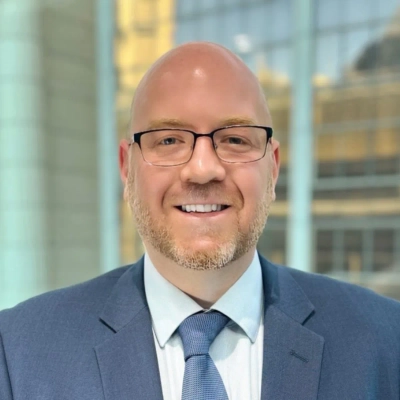 Damin MurdockPrincipal Lawyer, Leo Lawyers Pty Limited
One of the most valuable collaborative projects in my career has been my long-standing relationship with Lawpath, Australia's largest legal technology platform.
I initially collaborated with Lawpath as an external lawyer, assisting with the development of legal products and service offerings. As the relationship evolved, I established a law firm within the Lawpath ecosystem and transitioned several lawyers from my existing practice to help accelerate the launch and growth of Lawpath Legal's legal services offering. While I have since returned to Leo Lawyers as Principal, I continue to serve as Chief Legal Officer at Lawpath, providing strategic legal guidance and assisting with both internal and external legal matters when required.
The collaboration has been mutually beneficial because Leo Lawyers and Lawpath serve different segments of the market while sharing the same underlying philosophy. Lawpath focuses on delivering accessible legal solutions to small and medium-sized businesses through technology, whereas Leo Lawyers specialises in complex litigation, corporate transactions and strategic legal advice. Together, we have been able to provide businesses with access to quality legal services across every stage of their growth, from everyday legal needs through to sophisticated commercial disputes and transactions.
This partnership has significantly enhanced my visibility and credibility within the legal community. Working with one of Australia's leading legal technology companies has allowed me to contribute to innovative legal service delivery while demonstrating that traditional legal expertise and legal technology can complement one another. At the same time, my involvement has enabled Lawpath to strengthen its legal capability through experienced senior practitioners, while Leo Lawyers has benefited from increased exposure to a broader business community and referral network.
Ensuring the partnership aligned with my personal brand was straightforward because our values were closely aligned from the outset. Throughout the collaboration, I remained focused on delivering commercially pragmatic advice, maintaining high professional standards and putting clients' interests first. The partnership demonstrates that innovation, collaboration and technical excellence are not mutually exclusive, and that the legal profession can better serve clients by embracing both technology and trusted professional relationships.