
Appearances
Chris Walsh; Gerard Virga; Loren Schwartz; SERHII KOLISNYK; Emma Alves; Griffin Sher; and 6 others of record
Probe the Edges of Evidence
CW

A New Era in Legal Journalism and Expertise
Q&A
Discovery preparation can determine the outcome of a case long before trial begins, yet many attorneys overlook critical steps that strengthen their position. Legal experts emphasize that success depends on disciplined groundwork in areas ranging from evidence organization to witness preparation. This guide breaks down twelve essential but often neglected aspects of discovery that can significantly impact case results.
Chris Walsh; Gerard Virga; Loren Schwartz; SERHII KOLISNYK; Emma Alves; Griffin Sher; and 6 others of record
Criminal defense attorneys should strive to look more deeply around the edges of the evidence. Lawyers tend to focus on the reports, body-worn camera footage, and lab results, but the real friction points are often in the supporting layers: dispatch audio, CAD logs, bodycam activation gaps, and metadata tied to digital evidence. Those pieces rarely arrive neatly organized, and if you don't explicitly ask for them, they can quietly never show up.
When you dig into those peripheral materials, you often find the case starts to behave differently. A timeline that looked clean in a police report can fracture when dispatch timestamps do not match officer narratives. Bodycam footage that "starts late" or cuts off at key moments becomes fertile ground for suppression arguments or at least credibility challenges. Even small inconsistencies in who said what and when can shift how a judge or prosecutor evaluates the strength of the case.
Giving real attention to this layer of discovery has consistently changed outcomes in my practice. It creates leverage early, and sometimes that leads to dismissal or better plea terms.
 Gerard VirgaFounding Attorney, The Virga Law Firm, P.A.
Before anyone serves a single request in a family law case, I'll have the client reconstruct a day-by-day or week-by-week sequence of key events tied to money, parenting, and communication. Most lawyers jump straight to documentation without first knowing what story the records need to prove or disprove. That step sounds basic, but it adds essential context for everything that comes later.
I've found this also surfaces inconsistencies early, especially when text messages, Venmo notes, calendars, and bank activity don't line up with how a party is describing events. Judges notice precision, and opposing counsel tends to take you more seriously when your requests feel surgically chosen rather than exploratory.
When your case theory is clearly anchored in a reconstructed timeline, you can show the other side where their version breaks under basic documentation. That often leads to earlier resolution because you are pointing to a sequence of facts that either fits or doesn't, and that's a much harder position to bluff through.
 Loren SchwartzAttorney, Rouda Feder Tietjen & McGuinn
In personal injury cases, lawyers may be prone to overlooking their client's "before" story during discovery preparation. Such a narrative would be a detailed account of what the client's lifestyle was like well before the accident, and it would require collecting documentation and witnesses for discovery.
It's easy to overlook the "before" story because most of the focus of these cases relies on the facts leading up to, during, and after an accident. It might seem unnecessary compared to all of that, but a narrative detailing a client's previous lifestyle can matter a great deal when it comes to demonstrating how radically the injuries changed their life.
Building evidence to present such a contrast can certainly move the needle in the client's favor, and I've seen it happen often at my firm. Giving this detail the attention it deserves not only helps us advocate for our clients better, but it reminds us daily that we are working for real people who are entrusting us to help make their lives better after experiencing extreme hardship.
 SERHII KOLISNYKpartner, Attorney-at-law, PhD in Law, Managing Partner of LOBBY CLUB
From discussions with my colleague Sergey, who works on cases in Europe, one often overlooked area in discovery preparation is the early structuring and interpretation of data — not just collecting it, but understanding what actually matters for the narrative of the case.
In many situations, teams focus heavily on gathering as much documentation as possible, but underestimate the importance of building a clear analytical framework from the beginning. Without that, you end up with a large volume of information but no strategic direction — and that can weaken your position later.
Another critical point he highlights is the alignment between legal strategy and communication strategy. In Europe especially, where cases can quickly attract public or regulatory attention, what is uncovered in discovery doesn't stay purely "technical." If this aspect is ignored, you risk inconsistencies between what is argued legally and how the situation is perceived externally.
Giving proper attention to these elements has a very practical benefit: it allows teams to identify key risks early, control the narrative, and avoid surprises during later stages of the case. It also improves efficiency — instead of reacting to information, you work proactively with a clear understanding of what supports your position and what needs to be mitigated.
In short, discovery is not just a procedural step — it's a strategic phase where the outcome of the case is often already being shaped.
 Emma AlvesLawyer, Alves Law
The area that's most overlooked is financial disclosure. Not the obvious stuff, I mean the gaps. The money that does not appear in a declared income, the life that does not correspond to the tax return, the credit card bills that do not reveal at all the story of the sworn financial statement on my desk. The emotional element of the file tends to take up most of the initial client meetings. "Whom are the kids going to stay with? Who gets the house? The money trail is handled like something to be sorted out in the future and that's a costly mistake..
This is the opposite tip most lawyers will not tell you. Flag financial disclosure in the first meeting, not the second and not when you have entered. Right at the start. I provide clients with document which stretches back to at least three years and I explain to them the precise reason why this is important to their case.
I also look at lifestyle. When one of the spouses is reporting a modest income yet the family is traveling two times abroad a year, driving leased cars and remodeling the kitchen, that gap tells me something and it's also observed by the courts.
Now here's an example of what early preparation does. I have had clients approach me halfway through a file of another lawyer complaining that nothing was being done. In most of those situations the problem had been partial disclosure of financial information. After we straightened that out, clients who came in looking to have a two year court battle ended up settling in mediation. That isn't luck that's preparation done at the right time in the right order.
 Griffin SherPartner, Sher & Volk, P.A.
As a Miami native who spent years as a deckhand and dive instructor before specializing in maritime law at Tulane, I approach discovery with a focus on shipboard technical reality. My background allows me to look past generic incident reports and dive into the specific "as-built" engineering specs and manufacturer-specific maintenance manuals.
One overlooked area is the cross-referencing of vessel maintenance logs against the manufacturer's required service intervals for specialized hardware like a Palfinger crane or winch system. In a Jones Act claim, I found that a vessel owner had ignored a specific hydraulic seal replacement schedule mandated by the equipment manufacturer.
Focusing on these technical "OEM" manuals during discovery has repeatedly turned "unavoidable accidents" into clear liability cases. By comparing the manufacturer's strict requirements to the vessel's actual repair history, I can prove unseaworthiness based on maintenance failures that a standard document request would miss.
 Whitney AntonionoAttorney, WLA Family Law
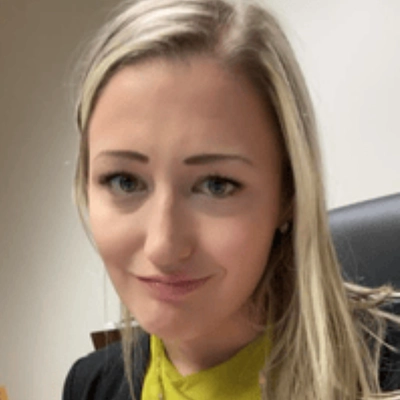
I see attorneys send discovery requests that were clearly not discussed with their client before hand. 90% of the discovery requests I receive include only the boilerplate requests that are sent in every other case. This is a huge missed opportunity.
I am an attorney licensed in Washington, DC, Maryland, New York and Texas and I am the owner and founder of WLA Family Law. In family law cases, yes, there are many boilerplate requests attorneys should and do use regarding to financials, employment, and basic background issues. However, that should not be the entirety of one's requests. Family law is personal. It is intimate. It dives deep into some of the most raw issues a person can ever face. These issues are rarely reflected in an attorney's requests and it always appears to be for the same reason, the attorney simply did not consult their client in drafting their requests.
When I include my client in the process of discovery request drafting, I learn so many important details to use in my requests. This almost always leads to a more insightful and more importantly, useful, discovery response from the opposing party. Had I not had my client to give me insight into certain areas, I would have asked just the standard requests and gotten the most standard and basic responses, which are rarely useful.
Whitney Antoniono, Esquire
WLA Family Law
whitney@wlafamilylaw.com
www.wlafamilylaw.com
https://www.tiktok.com/@wlafamilylaw
https://www.instagram.com/wlafamilylaw/
 Omid NosratiFounder, Nosrati Law
It's important to prepare your client's documents as if you were opposing counsel. You aren't just collecting them—you're pressure-testing them for inconsistencies, tone, and unintended admissions. In employment law, text messages, Slack threads, draft performance reviews, and calendar entries often tell a story that the formal record doesn't. When you map those materials against the claims and defenses early, you spot the narrative gaps before the other side does.
Giving this real attention changes leverage. I've seen cases turn on a single internal email that reframed intent or timing. When you've already identified that risk, you can contextualize it, line up corroborating evidence, or adjust your theory before depositions lock you in. It also sharpens deposition prep because you're not surprised by your own record.
 Steven A. SchwartzManaging Partner, Joel H. Schwartz, P.C.
Great question - and after 35 years handling personal injury cases in Massachusetts, I can point to one thing that gets underestimated constantly: witness preparation before depositions.
Most attorneys gather their witnesses and brief them right before the deposition. What I've found actually moves the needle is spending serious time earlier - walking witnesses through exactly how insurance defense attorneys will try to reframe their account of events. In a case involving a mechanic crushed under a truck that lurched off its jacks, the witness testimony about the sequence of events was everything. Had those witnesses been caught off guard by aggressive cross-examination framing, the entire liability picture shifts.
The other piece people miss is understanding how the insurance company on the other side operates before discovery even starts. Some carriers are known for dragging their feet and burying you in document requests. Knowing that going in lets you front-load your own discovery demands strategically rather than playing catch-up.
In personal injury, discovery isn't just paperwork - it's where you either lock in the other side's story or let them lock in yours. Get there first.
One overlooked part of discovery prep is just stepping back and asking, what is this case going to sound like when somebody boils it down. Because simplicity persuades. If the other side can explain the case in a cleaner, more believable way than you can, all the extra paper in the world may not save you.
So for me, good discovery prep is not just about gathering more information. It is about figuring out which facts are actually going to matter at the end of the day. Most cases, no matter how complicated they look in the file, end up turning on a pretty simple idea: they knew and did nothing, the timeline does not work, the story changed, or the records do not support it. If you are not looking for that early, you can spend a lot of time doing discovery without really moving the case forward.
That mindset has helped me make better decisions about what to push on, what really needs to be developed, and where the real exposure exists. It makes depositions more focused, written discovery more purposeful, and case evaluation more honest. The question is what still carries weight once the case gets reduced to something simple enough to stick.
 Christine HintzeEmployment Law Attorney, Phillips & Associates
One often-overlooked area of discovery preparation is non-traditional digital communications and data trails. Attorneys tend to focus on emails and phone records, but those only tell part of the story. Critical evidence frequently lives in platforms like Microsoft Teams, Slack, and messaging apps such as Snapchat, Signal, and WhatsApp, especially where communications are informal or intentionally kept off email.
Even when messages themselves disappear, ephemeral messaging metadata, who communicated with whom and when, often remains recoverable. That metadata alone can establish patterns of contact, frequency, and timing that corroborate a client's narrative.
Another underutilized source is Google Maps Timeline, which can track a person's movements over time, including locations like offices, restaurants, or bars. This type of data can be powerful in substantiating timelines or challenging a defendant's version of events.
In harassment and workplace misconduct cases, these alternative data sources are invaluable. Payment apps like Venmo or Zelle, as well as social and messaging platforms, can reveal more subtle dynamics, grooming behavior, shifting boundaries, or changes in communication patterns. Clients' own records, texts with friends or family, photos, and personal notes, can also provide real-time corroboration of what they were experiencing.
Giving this area proper attention has been a game-changer in my practice. It allows us to build a more complete factual narrative, corroborate claims with objective data, and proactively rebut defense arguments. When you surface this kind of evidence early, you're not just reacting, you're shaping the case, which can significantly strengthen your leverage in both settlement negotiations and at trial.
 Pride DoranManaging Partner, Doran & Cawthorne
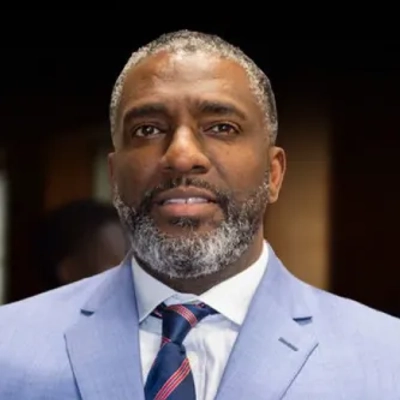
After 20+ years trying personal injury cases, the most overlooked area I see attorneys fumble is medical record chronology - specifically, mapping out the full timeline of a client's treatment history before depositions begin, not during.
Insurance defense lawyers are trained to hunt for gaps in treatment or pre-existing conditions to diminish your claim. In premises liability and workplace injury cases especially, I've seen solid cases fall apart because an attorney walked into a deposition without knowing their client had a prior back complaint buried in records from three years earlier. The defense finds it - and suddenly your client looks dishonest.
When I prepare that complete medical picture first, I control the narrative. In offshore and industrial injury cases, where clients often have years of physical wear-and-tear, I can actually use that history to show how a negligent party made an existing condition dramatically worse - which is compensable under Louisiana law.
The practical takeaway: pull every medical record, not just the ones related to the incident, before you talk strategy with your client. What looks like a liability at first glance often becomes your strongest argument once you understand the full picture.